South Africa’s street food scene has never been bigger. From the gourmet gatsby trucks lining Cape Town’s Sea Point Promenade to the braai stalls that set up outside every weekend market in Johannesburg, the food truck industry is booming. What started as a pandemic pivot has become a permanent fixture of how South Africans eat.
But here’s what nobody tells you when you buy a truck and paint a logo on the side: running a food truck is chaos. You’re dealing with weather, load shedding, fluctuating ingredient costs, council permits, and a customer base that moves constantly. Unlike a restaurant with a fixed address, your entire business can relocate overnight.
That mobility is your biggest strength and your biggest headache. People love your food, but they can’t find you. They follow you on Instagram but miss your stories about where you’re parked today. They want to order but the queue is 30 people deep and they’ve got 15 minutes left on their lunch break.
QR codes are solving all of these problems and more for South Africa’s food truck operators. Here’s how the smart ones are using them to serve more customers, build real loyalty, and sell food even when the truck isn’t there.
The Food Truck Problem Most Owners Don’t Realise They Have
Walk up to any popular food truck in South Africa and watch what happens. There’s a menu board, maybe laminated, maybe hand-written. Customers stand in front of it, deciding. The queue gets longer. People get impatient. Some leave.
That’s revenue walking away.
Then there’s the location problem. A food truck in Sandton on Tuesday needs to be in Maboneng by Thursday and a wedding in the Winelands by Saturday. Your followers on social media might see your post about Saturday’s location, but the people actually walking past your truck on a random Tuesday? They have no idea who you are.
And the ordering problem. During peak hours, one person takes orders, one person cooks, and one person handles payments. That’s three people minimum, and most food trucks run with two. Every second spent explaining the menu, answering questions about allergens, or processing a card payment is a second your line gets longer.
QR codes don’t fix all of these problems. But they fix most of them, and the ones they don’t fix directly, they make significantly easier to manage.
Strategy #1: The Scannable Menu That Does More Than Show Prices
This is the starting point, and it’s more powerful than most food truck owners realise.
A static menu board has limited space. You can fit your item names and prices, maybe a one-line description if you’re disciplined. But you can’t include ingredient lists, allergen warnings, dietary labels (halaal, vegan, gluten-free), or photos of the actual dishes.
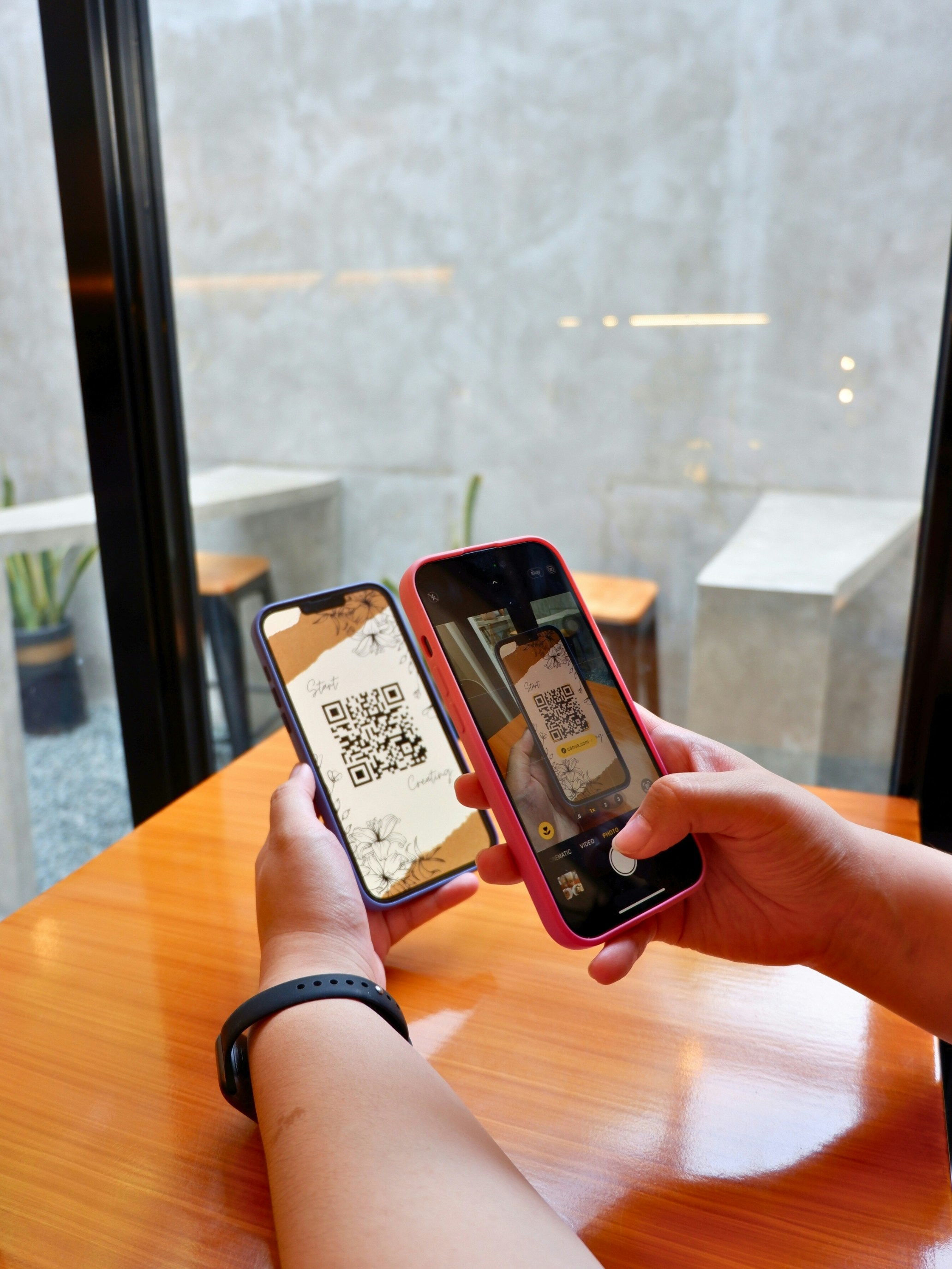
A QR code printed on your truck, your counter, or your napkins can link to a digital menu that includes all of this and more.
What a Smart Digital Menu Looks Like
A gourmet burger truck in Pretoria links their QR code to a landing page that includes:
- Full menu with photos of every item
- Ingredient lists and allergen information
- Dietary filters (halaal, vegetarian, vegan, nut-free, dairy-free)
- Daily specials that update automatically
- Portion sizes and spice levels
- Pairing suggestions (“Try this with our homemade ginger beer”)
When customers can browse the full menu while standing in queue (or before they even get there), they order faster. They ask fewer questions. They discover items they wouldn’t have noticed on a cramped chalkboard.
The result: This truck reduced average order time from 3.5 minutes to 1.8 minutes. During a 4-hour lunch service, that translates to serving roughly 40 additional customers. At an average order value of R95, that’s an extra R3,800 per day.
The Dynamic Advantage
Here’s where it gets better. With a dynamic QR code, the code itself never changes, but the menu it links to can update whenever you want.
Running out of a key ingredient? Remove that item from the digital menu in 30 seconds. No need to cross it out on the board and confuse everyone.
Launching a weekend special? Add it to the menu without printing anything new.
Got a new collaboration with a local brewery? Feature it prominently without rearranging your entire setup.
If you’re using a static QR code, you’re stuck. The destination is baked into the code. Change your menu URL and every printed QR code becomes useless. Dynamic codes give you a dashboard where you swap the destination link whenever you want, and the same printed code keeps working.
Strategy #2: Pre-Ordering That Beats the Queue
South Africans know queues. We queue at the bank, at the Home Affairs office, at the traffic department, and apparently at every good food truck in the country.
But during lunch hour in a business district, people have 30 to 60 minutes total. They’re not spending 20 of those minutes in a queue.
How Pre-Ordering Works
A bunny chow truck in Durban places a large QR code on the side of their truck with simple text: “Skip the queue. Scan to pre-order.”
When customers scan, they land on a simple ordering page:
- See the full menu with photos
- Select items and customise (spice level, side choices)
- Choose a pickup time (next available slot shown in real time)
- Pay online via card or EFT
- Receive a WhatsApp confirmation with an order number
When the customer walks up, they skip the queue entirely. They show their order number, grab their food, and go. Total time at the truck: under 30 seconds.
Why This Changes Everything
For the customer, it’s convenience. They order from their desk, pick up on time, and actually enjoy their lunch break.
For the truck operator, it’s revenue and efficiency. Pre-orders come in before the lunch rush starts, which means the kitchen can prep in advance. During peak service, pre-orders take priority because they’re already paid and assembled. Walk-in customers see the queue moving faster because pre-order pickups are instant.
The numbers from the Durban truck:
- 35% of weekday orders now come through pre-order
- Average pre-order value is R40 higher than walk-in orders (people browse longer and add extras when there’s no queue pressure)
- Queue wait times dropped from 15 minutes to 7 minutes during peak hours
- Customer return rate for pre-order users: 68% vs. 31% for walk-in only
The key insight: pre-ordering doesn’t just serve the same customers faster. It attracts a whole segment of customers who previously avoided your truck because they couldn’t afford to wait.
Strategy #3: Location Sharing That Actually Works
Every food truck owner knows the drill. Post your location on Instagram Stories. Share it on Facebook. Send a WhatsApp broadcast. Hope people see it before they decide what to eat.
The problem: Instagram Stories disappear in 24 hours. Facebook posts get buried. WhatsApp broadcasts feel spammy if you send them daily. And none of these reach new customers who don’t already follow you.
The QR-Powered Solution
A Cape Town taco truck prints their QR code on everything: the truck itself, their packaging, their napkins, their email footer, their market stall banner.
When someone scans it, they land on a page that shows:
- Today’s location (updated every morning by the owner)
- Operating hours for today
- A map with directions from the user’s current location
- Today’s menu and any specials
- A WhatsApp button to join the daily location broadcast
One QR code, printed once, that serves as a permanent digital home base for a business that moves every day.
The Daily Broadcast System
When customers join the WhatsApp list through the QR code landing page, they get one message per day, first thing in the morning:
“Good morning! Today we’re at the V&A Waterfront Food Market, 11am-8pm. Today’s special: Braai Pulled Pork Tacos, R75. Tap to view the full menu and pre-order.”
That’s it. Short, useful, not annoying.
Results after 3 months:
- WhatsApp list grew to 2,400 subscribers
- 42% of daily visitors say they came because of the WhatsApp message
- The truck’s “regular” customer base expanded from roughly 200 people to over 1,000
The New Customer Problem, Solved
Here’s the part most food truck operators miss: when someone new discovers your truck at a market or event, they love your food, but they have no way to find you again. They might follow you on Instagram, but the algorithm won’t show them your posts. They might save your number, but they won’t remember why.
The QR code fixes this permanently. Every customer who scans gets added to your ecosystem. They know where to find your location every day. They can order ahead. They get your specials. You’ve turned a one-time customer into a repeat customer with a single scan.
Strategy #4: Loyalty Without the Card
Coffee shops have loyalty cards. Restaurants have loyalty apps. Food trucks have… nothing. Or rather, they had nothing, because physical loyalty cards don’t work for businesses that move around and don’t have a permanent till system.
QR codes make loyalty programmes not just possible, but actually effective.
The Simple Version
A smoothie truck in Johannesburg has a QR code at their pickup counter: “Scan for your 8th smoothie free.”
When customers scan, they land on a page that tracks their visits. Every scan counts as one stamp. After seven visits, they get a unique code for a free smoothie on their eighth visit.
No physical card to lose. No app to download. The QR code links to a simple web page that stores their stamp count via a cookie or phone number lookup.
The Sophisticated Version
A food truck collective operating three trucks in Gauteng takes it further. Their loyalty programme, accessible through a single QR code, offers:
- Points earned per rand spent (tracked via pre-order or manual entry at checkout)
- Tiered rewards: free drink at 500 points, free meal at 1,500 points, VIP early access at 3,000 points
- Birthday rewards sent automatically via WhatsApp
- Referral bonuses: share your unique link, earn points when friends order
- Exclusive “secret menu” items only visible to loyalty members
Results:
- Loyalty members visit 3.2x more frequently than non-members
- Average order value is 28% higher among loyalty members
- 67% of new customers who join the loyalty programme return within 14 days
The reason this works: you’re not asking customers to do anything extra. They already have their phone out. Scanning a QR code takes two seconds. The loyalty programme happens in the background.
Strategy #5: After-Hours Revenue from a Truck That’s Packed Up
Here’s a scenario most food truck owners don’t think about.
It’s Saturday morning. You’re set up at the Neighbourgoods Market in Braamfontein. The morning rush is insane. By 2pm, you’ve served 300 people and you’re exhausted. You pack up, drive home, and that’s it until Thursday.
But what about the 200 people who walked past your truck between 2pm and 5pm, saw the queue was too long, and kept walking? What about the people who visited your truck, loved your food, and want to order for their upcoming event? What about the corporates in Sandton who want to book you for a Friday team lunch?
Your truck is a physical business that operates maybe 20 to 30 hours per week. The other 138+ hours, you’re invisible.
The Always-On Solution
A gourmet sandwich truck in Stellenbosch prints a QR code on their packaging, their truck wrap, and their market banner. It links to a landing page that works 24/7:
- During operating hours: Full menu, ordering, location, estimated wait times
- After hours: Event booking enquiries, catering quotes, WhatsApp sign-up for next location, pre-ordering for the next market day
The after-hours page generates catering leads that the owner follows up on Monday morning. In their first six months, this single page generated R180,000 in catering revenue from people who discovered the truck at a Saturday market and wanted to book them for private events.
R180,000 from a QR code on a napkin.
That’s the power of being available 24/7 when your physical business operates 20 hours a week.
Strategy #6: Building Your Brand Beyond the Truck
Food trucks have a branding problem. Your physical presence is temporary. Unlike a restaurant that people walk past every day, your brand disappears when you pack up.
Social media helps, but you’re competing with every other food truck, restaurant, and food influencer for attention. And you can’t control whether Instagram shows your posts to the people who actually care.
Owning Your Audience
QR codes let you build a direct relationship with customers that doesn’t depend on any platform’s algorithm.
Every interaction with your QR code, scanning the menu, joining the WhatsApp list, entering the loyalty programme, or submitting a catering enquiry, is a touchpoint you own. You decide what to communicate, when, and how often.
A shisanyama truck in Soweto uses their QR code ecosystem to:
- Send WhatsApp updates about their weekly Sunday braai pop-up
- Share behind-the-scenes content about their recipes and sourcing
- Run flash promotions (“First 20 people to scan this morning get a free side dish”)
- Collect customer feedback and menu suggestions
- Build an email list for monthly newsletters with recipes and event announcements
After 8 months: 4,200 direct contacts across WhatsApp and email. No advertising spend. No influencer partnerships. Just genuine relationships built one scan at a time.
When they launched a bottled sauce line, they sold out the first batch in 3 hours, entirely through their QR-built audience. No paid ads. No retailer. Direct to consumer, direct to people who already loved their food.
The ROI Breakdown: What This Actually Costs
Let’s talk rands, because food truck margins are tight and every cent counts.
What You’re Currently Spending
| Item | Monthly Cost |
|---|---|
| Menu reprints (laminated boards, chalkboard maintenance) | R300-R800 |
| Social media ads to announce location | R500-R2,000 |
| Printed flyers for events and markets | R200-R600 |
| Business cards | R150-R400 |
| Lost revenue from queue abandonment | R2,000-R8,000+ |
| Lost revenue from customers who can’t find you | Impossible to measure, but significant |
Conservative total: R3,150 to R11,800 per month in direct costs and lost revenue.
What a QR Code System Costs
A platform like Rytinco, which includes dynamic QR codes, landing pages, shortlinks, and analytics, starts at R99 per month.
For that R99, you get:
- Unlimited dynamic QR codes for your menu, pre-ordering, loyalty, location, and catering pages
- Landing page builder to create your digital menu, pre-order page, and event booking form without hiring a developer
- Real-time analytics showing scan counts, locations, times, and devices
- Update anytime without reprinting anything
- Custom branded shortlinks like rytin.co/braaiboyjozi for a professional look
Total monthly cost: R99
Compare that to the R3,150+ you’re currently spending, and the choice is obvious. But the real ROI isn’t in cost savings. It’s in revenue growth.
Projected Revenue Impact
| Strategy | Conservative Monthly Impact |
|---|---|
| Faster ordering (serve more customers in peak hours) | R3,000-R6,000 |
| Pre-ordering revenue | R4,000-R12,000 |
| WhatsApp location broadcasts driving foot traffic | R2,000-R5,000 |
| Loyalty programme increasing repeat visits | R3,000-R8,000 |
| After-hours catering enquiries | R5,000-R30,000+ |
| Total potential monthly revenue increase | R17,000-R61,000+ |
Even at the conservative end, you’re turning R99 into R17,000+ in additional monthly revenue. That’s not a marketing expense. That’s the highest-ROI investment in your food truck business.
Implementation: Your First Week
You don’t need to do everything at once. Start with the highest-impact strategy and build from there.
Day 1-2: Digital Menu
- Create a landing page with your full menu, photos, and allergen info
- Generate a dynamic QR code linking to it
- Print the QR code (large, clear) and place it on your truck and counter
- Start telling customers: “Scan for our full menu with photos”
Day 3-4: WhatsApp List
- Add a WhatsApp sign-up to your menu landing page
- Start sending daily location broadcasts
- Watch your audience grow naturally with every scan
Day 5-7: Pre-Ordering
- Set up a simple pre-order form on a landing page
- Add a second QR code: “Skip the Queue. Scan to Pre-Order”
- Promote it to your growing WhatsApp list
After week one, you’ll have a digital menu, a direct customer channel, and a pre-ordering system, all powered by QR codes that cost R99 per month.
Month 2 and Beyond
Add loyalty tracking. Build out your after-hours catering page. Experiment with flash promotions. Start collecting and acting on customer data.
Why This Matters More for Food Trucks Than Any Other Business
Restaurants have a fixed address. Customers know where to find them. They have space for printed menus and loyalty cards. They have a permanent till system.
Food trucks have none of these advantages. You’re mobile, constrained on space, and your customer base is scattered.
QR codes were practically invented for this business model. They turn your physical limitations, small space, no fixed address, limited staff, into competitive advantages. A single QR code on your truck does the work of a menu board, a loyalty card, a marketing campaign, a booking system, and a business card, all at once.
The South African food truck market is getting more competitive every month. New trucks are launching weekly. Markets are getting stricter about who gets prime spots. Customers have more choices than ever.
The trucks that thrive won’t just be the ones with the best food. They’ll be the ones that make it easiest to discover, order, pay, and return. QR codes make all of that possible for R99 a month.
Ready to get started? Start for free with Rytinco and set up your first food truck QR code today. No credit card needed, no technical skills required.
Or talk to our team about a setup tailored to your specific food truck operation. We’ve helped South African food businesses of every size go digital, and we’d love to help you serve more customers.
Looking for more ways to grow your food business? Read our guides on Dynamic QR Codes in 2025 and QR Code Statistics That Prove the ROI for deeper data on how QR codes are transforming food service.