If you’re running Google or Facebook ads, sending out email campaigns, or putting QR codes on your print materials — where are you sending people when they click or scan?
For a lot of South African small businesses, the honest answer is: the homepage. And that’s usually where the money disappears.
A homepage is built to explain everything about your business. A landing page is built to do one thing: get someone to take a specific action. Those are very different jobs, and they need very different pages.
Landing page vs. website — what’s actually different
Your website serves every type of visitor at every stage of the journey. Someone who just heard of you, someone comparing options, someone ready to buy — your website tries to serve them all.
A landing page cuts out that noise. It’s a standalone page with no navigation menu, one clear goal, and everything on it pointing toward one action: book a consultation, claim a discount, sign up for a trial.
The result is better conversion — not because landing pages are magic, but because you’ve stopped asking someone who clicked “Get 20% off your first order” to then navigate a six-page website to find where to actually claim it.
What genuinely matters on a landing page
Forget the “7-element framework” checklists. Here’s what actually makes the difference:
The headline must match what got them there. If your QR code on a flyer says “Scan for a free quote,” the first thing they see needs to be about getting that free quote — not your company history or a generic welcome message. This is called message match, and getting it wrong is the single biggest conversion killer.
One ask, not five. Links to your Instagram, your full product catalogue, your blog — each one is an exit. Pick the one action you want and remove everything else.
Enough context to make the decision easy. Visitors don’t know you yet. They need to understand what they’re getting, why it’s worth their time, and that you’re legitimate. One real testimonial from a customer in a city they recognise does more than a “trusted by thousands” badge with no context.
A short form. Name and email gets you a lead. Name, email, phone, company size, industry, and “how did you hear about us?” gets you nothing, because nobody finishes it. Ask for what you need now — you can collect more later.
Building it without a developer
For most SA small businesses the maths is simple.
Hiring a developer: R5,000–20,000 upfront, a week or two of back-and-forth, and then back to them every time you want to change a word or update an offer.
Using a no-code builder: live in under an hour, edit whenever you want, no middleman.
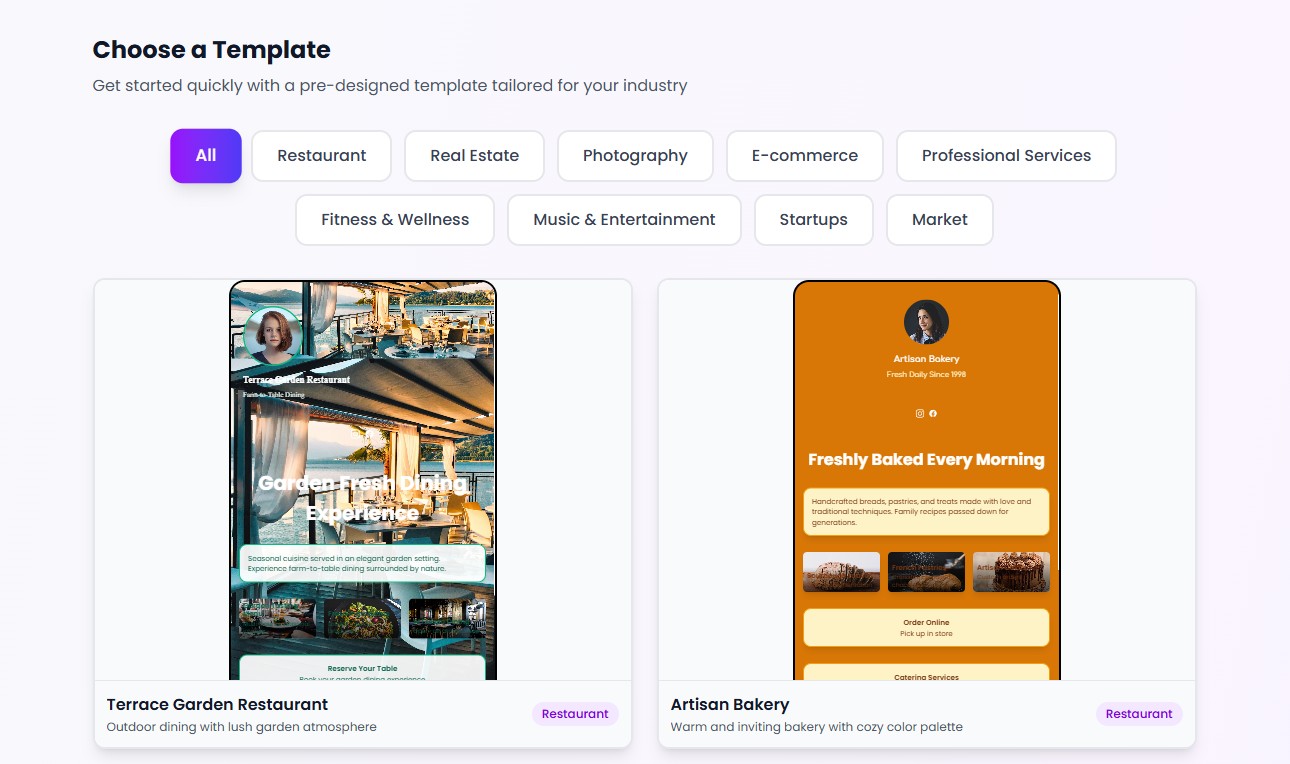
Rytinco’s landing page builder is set up specifically for how SA businesses actually use landing pages — as QR code destinations, Instagram bio links, and campaign-specific pages that change with your promotions. You connect a landing page directly to a dynamic QR code, so when your offer changes you update the page without reprinting anything.
It’s also mobile-first by default, which matters here. The majority of your visitors are on their phones, on mobile data, and not patient with slow pages.
A practical example: seasonal sale
Say you run a Joburg clothing store with a winter promotion. Your in-store displays and printed tags have a QR code that reads “Scan for 15% off online.”
The page that QR code points to should do one thing: show the discount code and a button to the online store. Not the homepage. Not the “About Us” page. Just the delivery on what you promised.
When the sale ends, you update the landing page — or point the QR code to a new page entirely — without printing new materials or calling a developer. This is where dynamic QR codes and landing pages work together: the print is fixed, but the destination can always change.
Knowing what’s actually working
The real advantage of a purpose-built landing page tool over a static page is visibility into what’s happening. With Rytinco you can see how many people visited, where they came from (QR scan vs. direct link vs. social bio), and how many completed the form or clicked through.
If you’re running two different promotions — say, one via email and one via in-store QR codes — you can see which is converting. If your form completion rate drops, that’s your signal something on the page needs to change.
Most small business owners never look at this. The ones who do can cut what isn’t working within a week and double down on what is.
When a landing page isn’t what you need
It’s worth being direct: landing pages aren’t always the answer.
If someone scans your QR code wanting your restaurant’s full menu with all categories, dietary filters, and prices — a landing page isn’t right. You want your full menu page. If someone’s scanning to find your location and trading hours, send them to a Google Maps link or a simple contact page.
Landing pages work best when you’re trying to drive one specific action in response to a specific campaign. Generic information pages don’t need the single-focus treatment.
Getting started
Rytinco’s free plan includes landing pages — you can build your first one without a credit card, connected to a dynamic QR code or short link.
If you’re currently sending QR code traffic to your homepage and running any kind of promotion, a dedicated landing page will almost certainly improve your results. Not because of any specific design trick — but because you stop making people figure out where to go next.